


Emergency Medicine Residency Program celebrates 40 years
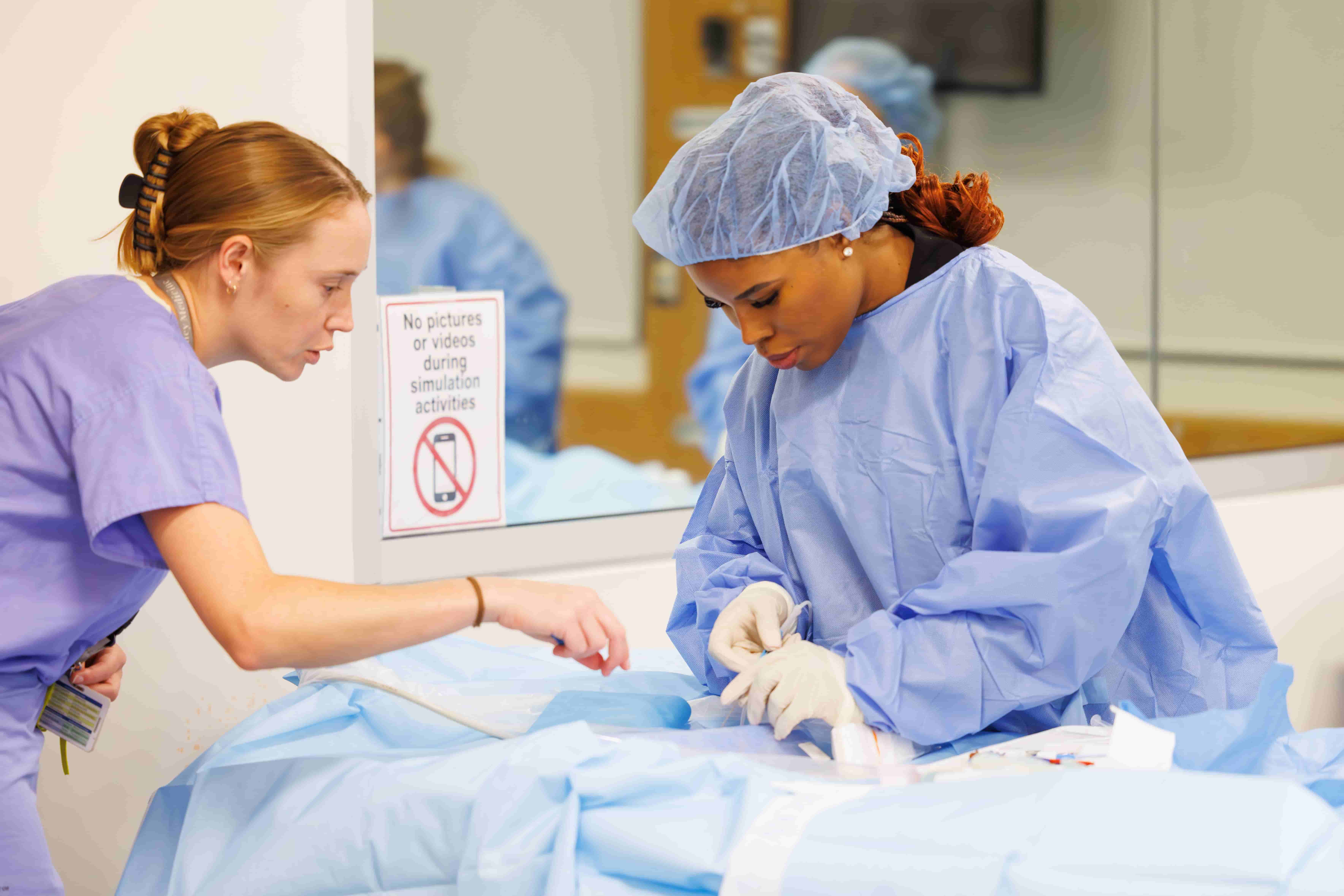
Forty years ago, the future of emergency medicine training at the University of Mississippi Medical Center was uncertain.
Today, the Department of Emergency Medicine cares for tens of thousands of patients each year, trains physicians and other health professionals, conducts acute-care research, and supports medical response efforts across Mississippi. Its work extends from the bedside and classroom to poison control, telehealth, critical care transport, and statewide disaster response.
But before the department could build that broad mission, its residency program first had to survive.
UMMC established its emergency medicine residency in 1986, when the specialty was still working to gain recognition and independence within academic medicine. The program became the 45th emergency medicine residency in the country and welcomed its first class of four residents that July.
The program grew from the work of a small group of physicians, including Drs. Bob Jordan, Jimmy Kolb and Rick Carlton, who helped establish its clinical and educational foundation.
At the time, Emergency Medicine was a division of the Department of Internal Medicine, with limited control over its budget, staffing, and operations. Emergency care was provided largely by Internal Medicine interns, medical students, and attending physicians trained in other specialties, with only eight faculty members covering the emergency department around the clock.
Emergency Medicine also faced resistance as it sought a larger role in patient care and medical education. Carlton worked to secure representation on the School of Medicine Curriculum Committee, giving the growing specialty a voice within the institution.
Then, in 1994, the program’s future was called into question.
Following a site visit, the Accreditation Council for Graduate Medical Education’s Residency Review Committee cited inadequate institutional support and a lack of emergency medicine-trained faculty. UMMC was given a list of deficiencies to correct, including the need to establish Emergency Medicine as an independent academic department.
Dr. Bob Galli, who had been recruited from UCLA, worked with then-Vice Chancellor Dr. Wallace Conerly to secure departmental status. Galli was named the department’s first chair in 1994 and prepared a 184-page plan addressing the committee’s concerns.
At the same time, the program continued recruiting. Applicants interviewed knowing the residency’s future had not yet been secured. Six chose to rank UMMC before learning whether the program would remain accredited. Months later, the residency was reinstated without losing full accreditation. Galli went on to lead the department for 17 years.
Dr. LouAnn Woodward, Vice Chancellor for Health Affairs, experienced that era firsthand. She completed her Internal Medicine internship and Emergency Medicine residency at UMMC, graduating in 1995. She later joined the faculty, served as associate program director and became program director in 2003 before advancing through a series of School of Medicine and Medical Center leadership roles.
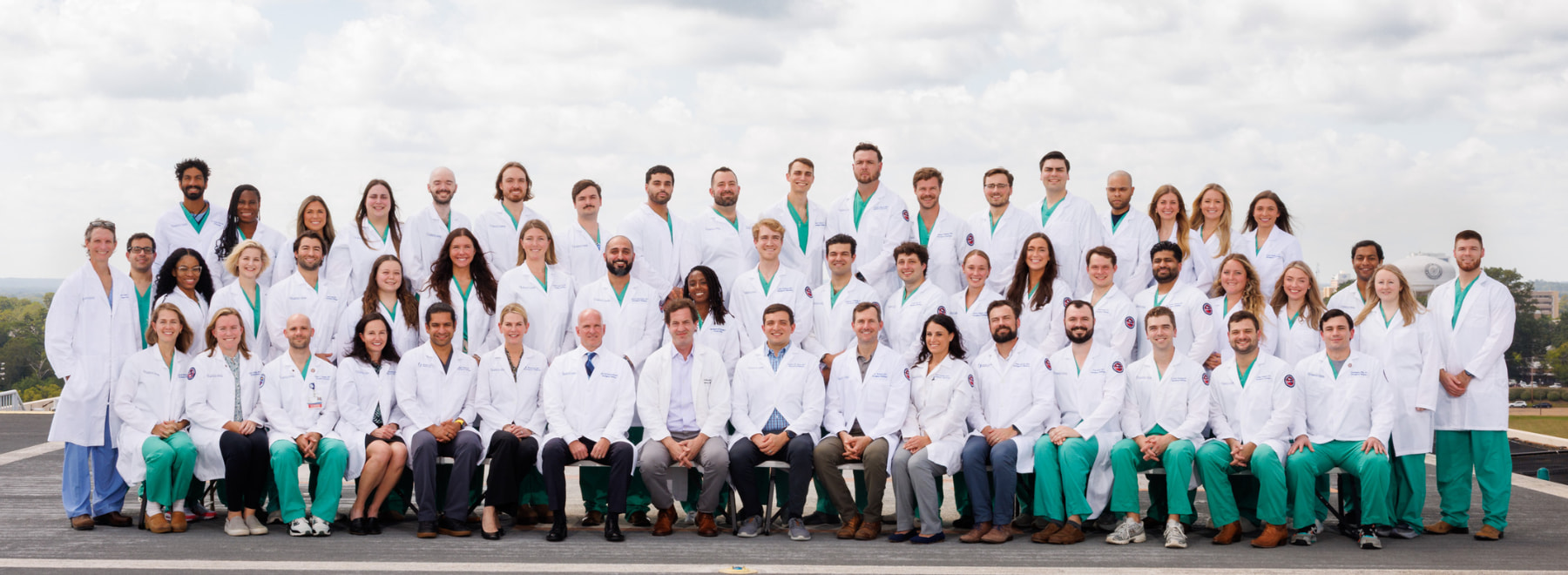
The department also became home to other influential educators and leaders. Dr. Loretta Jackson joined UMMC in 1999 after completing emergency medicine training in California and went on to serve in residency, clerkship and School of Medicine leadership roles. Later departmental leaders included Dr. Richard Summers, who developed a nationally recognized research career, and Dr. Alan Jones, who served as department chair before moving into broader health system leadership.
As the department gained its footing, faculty also pressed for changes in how emergency care was practiced.
They used emerging clinical evidence to advocate for more frequent and continuous breathing treatments for severe asthma and D-dimer testing to help rule out pulmonary embolism. They secured approval for emergency physicians to use rapid sequence intubation medications and procedural sedation without depending on another specialty.
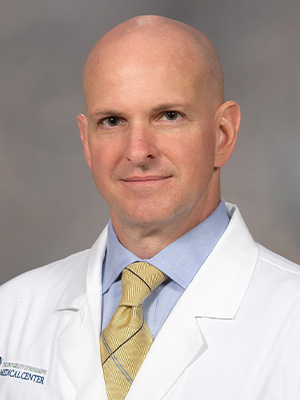
“Forty years gives us an opportunity to look back and appreciate how far we’ve come, but it also reminds us why the program was created in the first place,” said Dr. Kendall McKenzie, Chair of the Department of Emergency Medicine. “Mississippi needs emergency physicians. Our responsibility is to continue preparing them, supporting them and finding new ways to deliver high-quality emergency care to the people of this state.”
Faculty also helped establish bedside ultrasound in the emergency department. At a time when emergency physicians generally relied on Radiology to perform ultrasound examinations, department physicians recruited ultrasound-trained faculty, incorporated the technology into resident education, and demonstrated its value in trauma and other time-sensitive conditions.
That spirit of innovation continues today through a department that combines clinical care, education, research, and statewide service. Its dozens of faculty members support a fully accredited residency, the Division of Medical Toxicology, active research, aeromedical critical care transport, and disaster response, while also providing medical oversight for UMMC’s Simulation Laboratory and advanced cardiac life support training.
At the center of that work is the three-year residency, which offers 16 first-year positions and has graduated more than 200 emergency physicians. Graduates practice across Mississippi, the Southeast, the country and internationally, a quarter of them pursuing careers in academic medicine. Residents train in UMMC’s adult emergency department, part of Mississippi’s only Level I trauma center, along with pediatric, medical, surgical and neurological intensive care; obstetrics; anesthesia; orthopaedics; toxicology; ultrasound; and community emergency medicine. Faculty also teach medical students, nurses, dentists, and allied health students.
The department’s expertise extends beyond the emergency department. The Division of Medical Toxicology, established in 1996, serves as Mississippi’s toxicology referral resource, treating about 300 patients each year and providing medical expertise to the Mississippi Poison Control Center. Research spans cardiovascular emergencies, shock and resuscitation, trauma, sepsis, sickle cell disease, toxicology, neuroscience, ultrasound, and telemedicine, with more than $5 million in grant support from the National Institutes of Health and other agencies.
That statewide role includes TelEmergency, which since 2003 has connected UMMC emergency physicians with providers at rural hospitals in real time. Through the Mississippi Center for Emergency Services, the department also supports critical care transport, medical communications and disaster response. UMMC maintains two deployable 50-bed field hospitals that can be combined into a facility of more than 100 beds, while AirCare expanded its transport capabilities in 2026 with plans to add a Pilatus PC-12 fixed-wing aircraft through its partnership with Global Medical Response.
What began as a small program seeking recognition has become an academic department whose responsibilities span nearly every part of emergency care. Its physicians treat patients at the state’s only academic medical center and Level I trauma center, train the next generation of emergency physicians, advance research, support rural hospitals, manage toxic exposures, transport critically ill patients and help Mississippi prepare for disasters.
The department’s reach today reflects the determination of the physicians who built and preserved its residency four decades ago. In 2026, the residency’s 40th anniversary recognizes that history and the generations of physicians who continue to carry it forward.
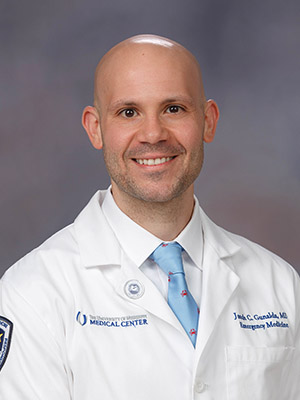
Gunalda
“Knowing the history of this program gives you a different appreciation for being here,” said Dr. Jonah Gunalda, director of the residency program. “The physicians who came before us had to fight to establish Emergency Medicine at UMMC and protect its future. We get to train here because of what they built, and I think there’s a real sense of responsibility in knowing that we’re now part of that story.”